My Front Garden Was a Concrete Slab, Here Is What I Planted Instead
/ by Brendan Walsh / Gardens and Landscaping
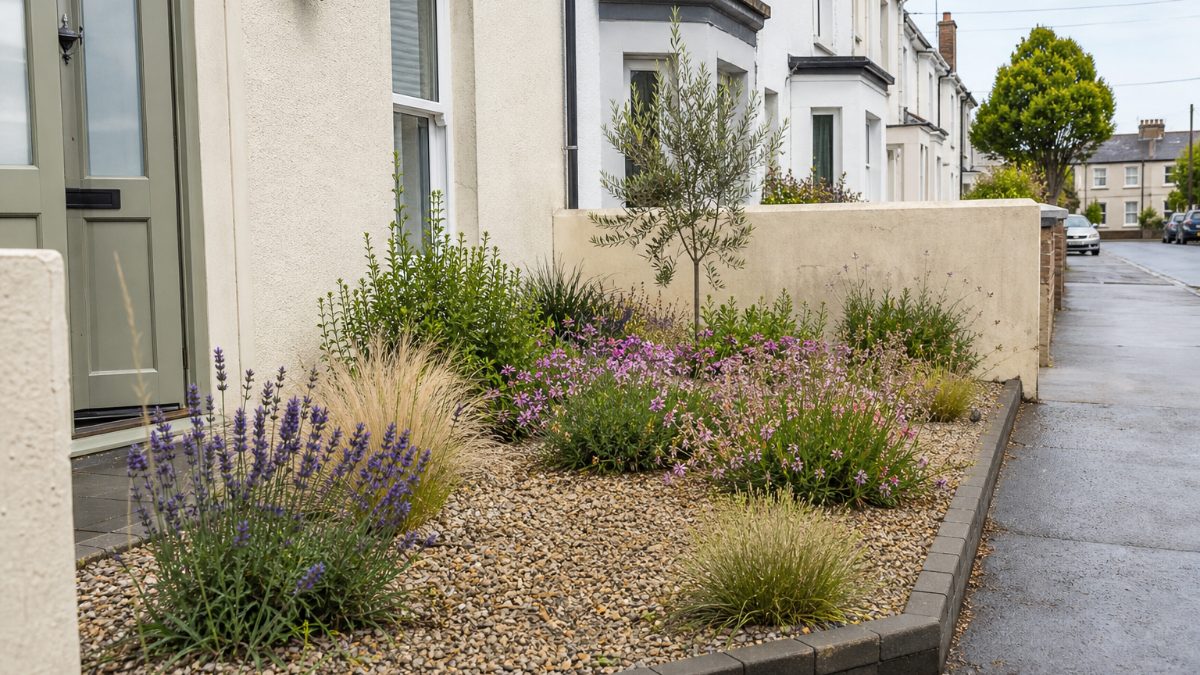
The house we bought in Cork had a front garden that was entirely concrete. Not even nice concrete. Just a flat grey slab with a rusted metal gate, a cracked path down the middle, and a few weeds pushing through the joints. The previous owners had clearly decided that low maintenance meant no plants at all. I understood the logic, but every time I pulled up outside I felt vaguely depressed by it.
Breaking it up was easier than I expected. We hired a small electric breaker for a weekend, lifted the slabs in sections, and hired a skip. If you have ever thought about doing something similar, the groundwork itself is not the hard part. The hard part is deciding what to do with the space afterwards, especially when you are not a gardener by nature and you do not want to spend every Sunday on your knees pulling things out.
What I did not want was high-maintenance borders that needed constant attention. We get a lot of rain in Cork. Atlantic weather means the soil stays damp for months, slugs are aggressive, and anything fussy will simply sulk and die. I needed plants that suited the actual conditions rather than the conditions I might wish I had.
What we put down first
Once the concrete was out, the soil underneath was compacted and poor. We added a decent layer of topsoil mixed with grit for drainage, because even with Atlantic rainfall you can get waterlogged patches that rot roots. Getting the soil right before planting saves a lot of grief later.
We kept a narrow gravel strip along the front wall and a small paved area near the gate for practicality. The rest, roughly twelve square metres, became planting space. Twelve square metres sounds like a lot until you are standing there with a trowel wondering what goes where.
The plants that actually worked
I asked around, looked at what was thriving in neighbours' gardens rather than what looked good in catalogues, and ended up with a shortlist of things that genuinely cope with the west of Ireland.
Phormium (New Zealand flax) was the first choice. It is tough, architectural, and completely unbothered by wind or rain. The bronze and green varieties give you year-round structure without you having to do anything except cut out the odd dead leaf.
Heuchera works well as low ground cover. The coloured foliage, purples, burnt oranges, limes, stays interesting through most of the year. Slugs can go for it in a wet spring but it recovers. I planted several clumps between the phormiums and they filled in nicely within one season.
Crocosmia was a bit of a gamble because it spreads, but in a contained front border that is actually useful. The orange flower spikes in late summer look well and the strap-like leaves fill gaps. You do need to divide it every couple of years or it gets congested, but that is about five minutes of work.
Escallonia went along the boundary wall as a low informal hedge. It handles salt air and wet winters without complaint, flowers pink in early summer, and needs one clip a year at most. For anyone on the coast or in a wet county, it is one of the more reliable choices going.
Libertia grandiflora was a recommendation from someone at a local plant fair and it has earned its spot. White flowers in late spring, evergreen grassy clumps, completely unfussy. It looks elegant without requiring anything from you.
The maintenance reality
Two years on, the front takes me maybe an hour a month in the growing season and almost nothing from November to February. I do a tidy in autumn, which I try to do alongside the broader jobs covered in a good autumn garden checklist for Irish homeowners. Beyond that it largely looks after itself.
The gravel strip near the wall does need occasional weeding, maybe three or four times a year. That is the most labour-intensive part of the whole thing, which tells you something about how low-effort the planted areas have become once they establish.
The one thing I would change is the edging between the gravel and the beds. I used basic plastic edging and it has started to lift in places. Metal edging would have been worth the extra cost. Small detail, but it matters when you are looking at it every day from the sitting room window.