Flat Roof on a Rear Extension: EPDM Rubber Versus Felt, and Why I Went with Rubber
/ by Brendan Walsh / Roofing and Damp
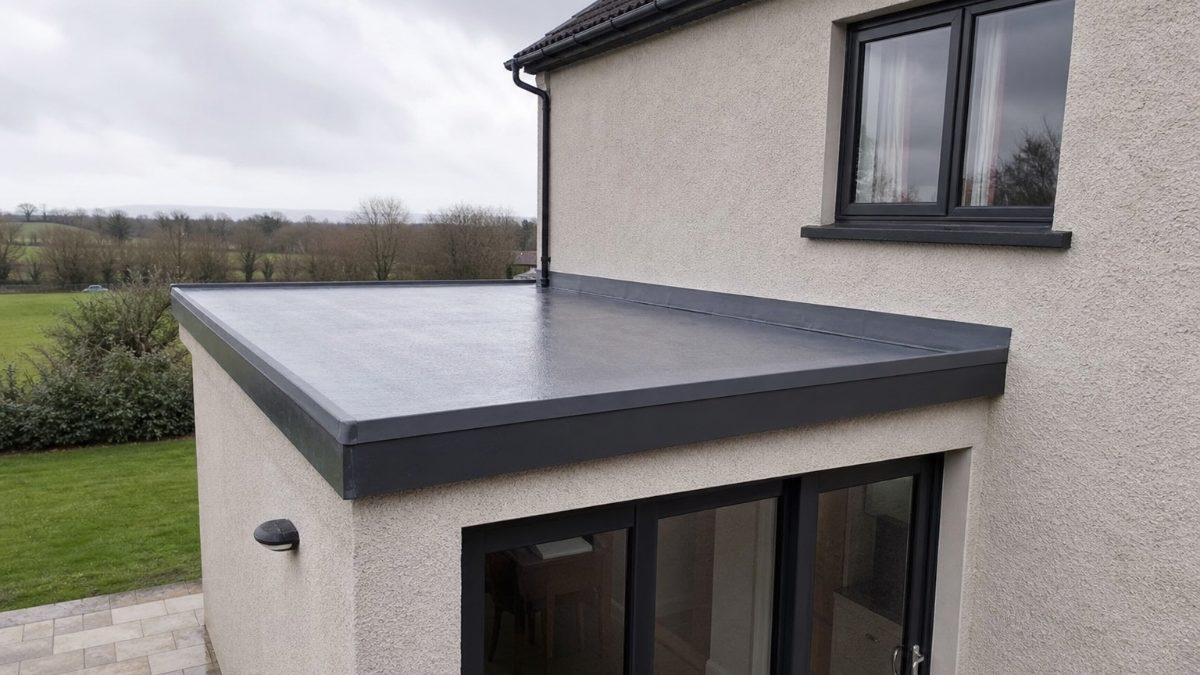
When we started planning a rear extension on our terraced house in Galway, the flat roof question came up early. The builder gave us two options straight away: traditional felt or EPDM rubber. I had a rough idea what felt was, but EPDM meant nothing to me until I started asking around. After pricing both and spending a few evenings reading everything I could find, we went with rubber. Here is what I found out and why we made that call.
What the two systems actually are
Felt, or more precisely mineral-capped torch-on felt, has been used on flat roofs in Ireland for decades. It comes in layers, usually two or three, bonded together with heat. Most roofers in the country have laid it, materials are widely available, and the upfront cost is lower than rubber. That familiarity is part of its appeal.
EPDM stands for ethylene propylene diene monomer, which sounds complicated but is basically a synthetic rubber membrane. It comes in large single sheets, is bonded to the roof deck with adhesive, and the seams are sealed with tape or bonded joins. A good installation has very few seams at all, which matters a lot on a flat surface that is going to sit under Irish rain for years.
The price difference in real terms
For our extension, which was about 18 square metres, the felt quote came in at roughly 900 euro fitted. The EPDM quote was just under 1,400 euro. That is a meaningful gap on a tight build budget, and for a while I nearly talked myself into the felt on that basis alone.
What changed my thinking was asking about lifespan. Felt, even quality torch-on felt installed correctly, is typically expected to last somewhere between 10 and 20 years before it needs serious attention. The lower end of that range is not unusual in a wet, exposed climate like the west of Ireland. EPDM, done properly, is generally talked about as lasting 30 to 50 years, and there are rubber roofs from the 1970s still performing in the United States where the material has been used longer.
When I worked out the rough cost per year over a 30-year period, the rubber membrane was actually cheaper. That is not a complicated calculation, but it is one worth doing before you default to the cheaper upfront option.
Installation: what to watch for
Felt is more forgiving of a less experienced roofer because the torching process is familiar and widely understood. The risk with EPDM is that if the adhesive is applied poorly, or if the membrane is not rolled out without tension, you can get lifting or bubbling over time. The seams are also critical. This is a job where the quality of the installer matters more than the material itself.
Ask any roofer quoting EPDM how many rubber roofs they have done and whether they have used that specific product before. Some roofers are genuinely experienced with it, others have done a few and are still learning. It is not a reason to avoid rubber, it is just a reason to ask the question directly.
One thing that surprised me was how the rubber handles ponding water. Flat roofs in Ireland rarely drain as fast as they should, partly because of how they are built and partly because gutters get blocked. EPDM tolerates sitting water much better than felt, which can degrade and crack over time under those conditions. Given our average rainfall in Galway, that felt relevant.
What about the deck underneath
Neither system performs well on a rotting or uneven substrate. Before anything goes on top, the timber deck or insulated board beneath needs to be sound. If you are replacing an old felt roof and find soft spots or damaged timbers when you strip it back, deal with those first. A good membrane on a bad deck is still a problem waiting to happen, and identifying damp issues early is a lot cheaper than finding out through a stained ceiling.
We are about eight months into our rubber roof now. No issues, no leaks, no lifting. The winter came in hard across Connaught as it usually does, and it held without complaint. For anyone facing the same choice, I would make the same decision again.