Tarmac vs Resin Bound: Which Driveway Surface Actually Suits an Irish Climate?
/ by Brendan Walsh / Driveways and Groundworks
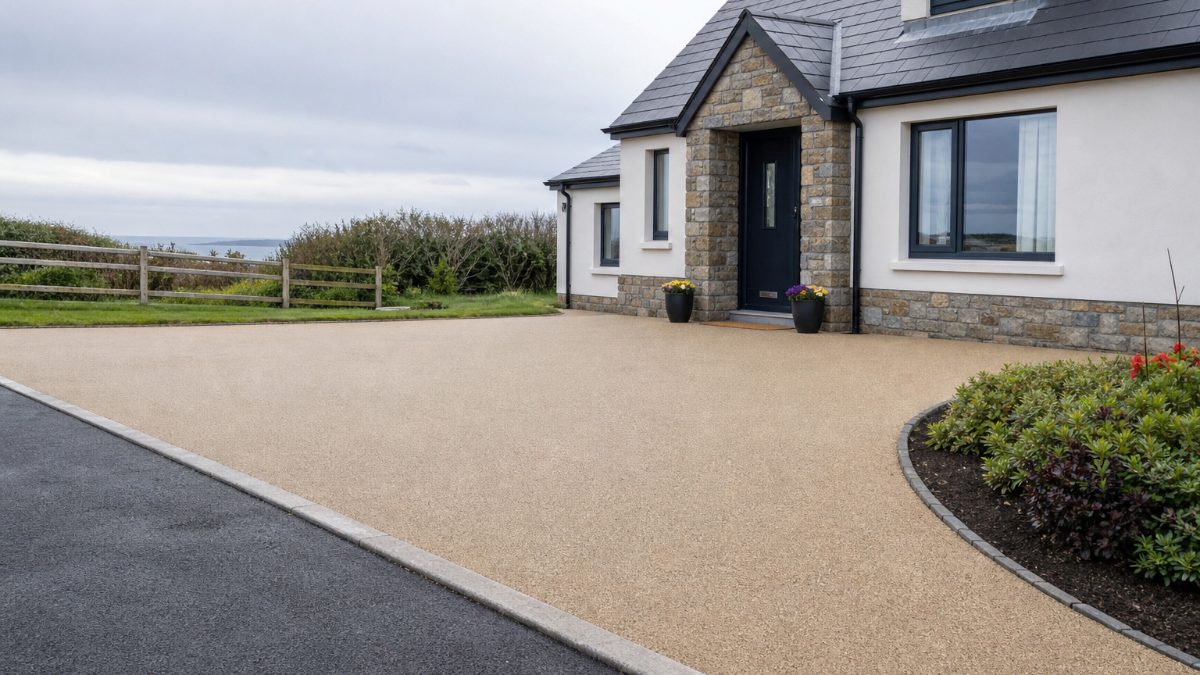
If you're deciding between tarmac and resin bound for a new driveway, you're in good company. These two surfaces dominate the market right now, and for most Irish homes they're the two that make the most practical sense. But they suit different situations, and the Irish climate throws in a few extra things worth thinking about before you commit.
The basics of each surface
Tarmac is the stuff roads are made of. Black, solid, rolled flat. It's been used on driveways here for decades and most people have a rough idea what it looks like. A contractor lays a base layer, then a wearing course on top, and you're done. It sets within a day and you can drive on it fairly quickly.
Resin bound is a different animal. Small stones are coated in a clear resin and trowelled onto a prepared surface. When it sets, you get a smooth, slightly textured finish that shows the aggregate. It comes in various colours and stone mixes, so it can look quite smart. It's also porous by design, which matters a lot more than people realise.
The planning and drainage question
This is where a lot of homeowners get caught out. Since around 2008, planning rules here require that front driveways over a certain size use a permeable surface or drain water into a soakaway or planted area, rather than letting it run straight onto the public footpath or road. Standard tarmac is impermeable. It sheds water off the surface.
Resin bound, done properly over a suitable sub-base, is fully permeable. Water passes through it and into the ground. That means it typically ticks the planning box without needing an elaborate drainage system. With tarmac, you can still comply, but you'll need to plan for drainage at the edges or install a channel drain, which adds cost and complexity.
If you're covering a large area and want to keep things straightforward from a planning perspective, resin bound has a real advantage here.
How each handles an Irish winter
This is the honest test. We get a lot of rain, we get freeze-thaw cycles, and in many parts of the country the ground stays damp for months on end. Both surfaces have their weaknesses in those conditions.
Tarmac can soften in prolonged heat (less of a problem here, admittedly) and it can crack over time, particularly if the sub-base shifts or settles unevenly. Once a crack opens up, water gets in, the freeze-thaw process widens it, and within a couple of winters you've got a surface that's starting to look rough. The good news is tarmac is relatively easy to patch, though the patch rarely looks invisible.
Resin bound holds up well in wet weather because water moves through it rather than pooling on top. That reduces the ice risk on the surface itself. The weak point is the installation. If the sub-base isn't properly compacted and built up correctly, or if the resin is mixed badly or laid in cold, damp conditions, you can get patches lifting or stone coming loose within a year or two. Quality of installer matters enormously here. A cheap resin job on a poor base will fail faster than a decent tarmac driveway.
Cost and longevity
Tarmac is generally cheaper to install. For a standard suburban driveway, it's often roughly half the price of resin bound, though costs vary a lot depending on size, access, and what groundwork is needed. A well-laid tarmac surface can last 15 to 25 years with basic maintenance. Resin bound, properly installed, can last a similar length of time, but the upfront cost is noticeably higher.
Resin does tend to hold its look better over the years. Tarmac fades and gets that tired grey-black look. Resin keeps more of its colour and doesn't absorb oil stains as readily, which matters if you're parking a car on it daily.
So which one is actually better for here?
If budget is tight and you want a durable, low-fuss result, a properly laid tarmac driveway with decent edge drainage does the job. If you want something that looks well, handles permeability requirements cleanly, and you're happy to pay more upfront, resin bound is worth it, as long as you spend real time finding a contractor who knows what they're doing. That last part is non-negotiable. The surface is only as good as what's underneath it and who put it there.